Play-based learning
Play is how children learn best. We use it deliberately to build language, thinking and social skills.
Welcome to Rays Childcare
We are committed to supporting children with diverse developmental, communication, behavioural, learning and educational needs — helping each one develop the skills, confidence and independence they need to participate meaningfully at home, in early childhood settings, at school and within their communities.


Who we are
We recognise that every child is unique. Children develop at different rates, learn in different ways, and may require different forms of support to reach their potential.
Our approach therefore focuses on understanding each child's individual strengths, interests, abilities, developmental needs, and areas requiring additional support. We create supportive learning experiences in which children are encouraged to develop at their own pace while building on what they already do well.
How we help
Depending on each child's needs, learning and support activities may include:
Play is how children learn best. We use it deliberately to build language, thinking and social skills.
Clear routines and step-by-step activities help children know what comes next and feel confident taking part.
Expressive and receptive language, vocabulary, sentence formation and functional communication.
Turn-taking, joint attention, imitation, group activities and building relationships with peers and adults.
Schedules, first-then boards and visual task lists make expectations clear and reduce anxiety.
We notice and name the things children do well, so effort and progress feel real.
Self-help and daily-living skills that give children real independence at home and out in the world.
We break complicated jobs down into small, achievable steps, then fade the prompts as children learn.
Where appropriate, structured approaches such as PECS-based communication strategies and TEACCH-informed activities may also be incorporated to support communication, participation, learning and independence.
Our goal is not simply to help a child complete an activity in a structured setting. We aim to help children develop functional skills that can be applied meaningfully in everyday life.
Children we work with
Our work supports children who may experience a range of neurodevelopmental, communication, learning, behavioural and developmental challenges, including:
Areas of development
Depending on each child's individual needs, support may focus on any of the following areas.
Expressive and receptive language, vocabulary, sentence formation, following instructions and social communication.
Learn moreManaging frustration, expressing needs, cooperation, tolerance and transitions between activities.
Learn moreAttention span, concentration, memory, early literacy and numeracy, reading and writing.
Learn moreTurn-taking, imitation, classroom participation, self-help skills and daily-living independence.
Learn morePencil grip, hand strength, hand-eye coordination, tracing and handwriting development.
Learn moreIf you have concerns about your child's communication, behaviour, attention or progress, get in touch and we'll talk it through.
Talk to us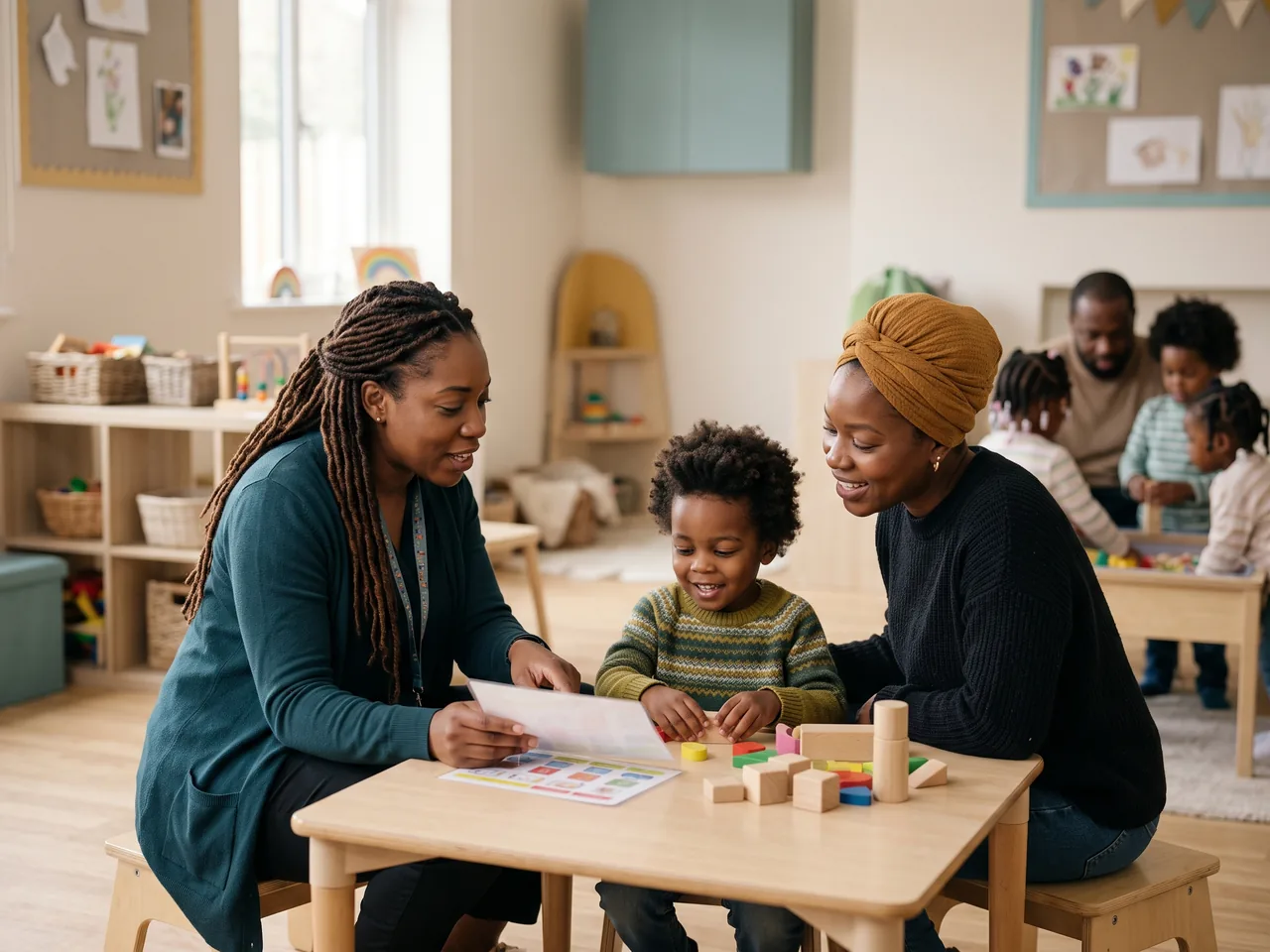
Working together
Meaningful progress is strengthened when parents, caregivers, early childhood educators, teachers, therapists and other professionals work together.
We therefore encourage collaborative support that extends beyond the learning or therapy environment. Parents and caregivers can be provided with practical strategies and guidance that can be incorporated into everyday routines at home.
Helping children build skills for life
Every child has potential. With understanding, appropriate support, meaningful learning experiences and collaboration, we can help children learn, communicate, connect and thrive.
We learn what your child can do, what they enjoy, and where they need more help.
We set individualised goals and choose activities that match how your child learns.
Children build skills through play, structure and repetition, at a pace that works for them.
Progress is shared with you so new skills carry into home, school and community life.
Early professional assessment and individualised support can help identify appropriate areas of intervention and learning support.